




Expert in Filters,
Frequency Control Components
Design Expertise, Advanced Equipment, HIGH QUALITY
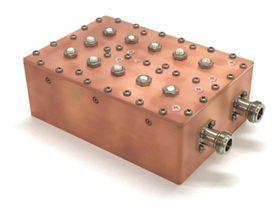
A Cavity Filter is type of RF filter that operates on the principle of resonance. Physically, it is a resonator with a “tuning screw” (to fine-tune the frequency) inside a “conducting box”. An RF or microwave resonator is a closed metallic structure (i.e., waveguides with both ends terminated in a short circuit). The resonator oscillates with higher amplitude at a specific set of frequencies, called resonant frequencies. When an RF signal passes through the cavity filter, a resonator acts as a band-pass filter and passes RF signals at particular frequencies (i.e., resonant frequencies) while blocking other nearby frequencies.
The resonant frequency of the cavity resonator depends on its dimension (length, width, height), mode number, dielectric constant (εr), and magnetic permeability (µr) of the material of construction. In a cavity filter, the resonator is fitted with a screw to tune the frequency range which allows to modify the physical length (inner space length) of the resonator as well as its capacitance to the ground, hence tuning the resonant frequency.
Key Performance Attributes:
Cavity filters are used in the MHz/GHz frequency range and are particularly preferred for applications from 40 to 960 MHz. However, the frequency range does go in to the GHz range as well. They provide high Q-factor (i.e., high-selectivity/sharply attenuates the unwanted signals), low insertion loss, and robust temperature stability when compared to lumped element and distributed element filters. These advantages make cavity filters ideal for use in microwave and millimeter-wave systems that need filters with high-Q factor, lower insertion loss, and temperature stability.
In most cases, more than one cavity filters are grouped in series with each other to increase filter effectiveness by making the passband deeper with respect to surrounding frequencies. This cascade structure is helpful when ham repeaters are situated very close to other spectrum users, such as pager, whose unwanted signals can interfere with the ham equipment.
Physical Structure of Cavity Filters
Cavity filters can also have coupling loops at the input and output.
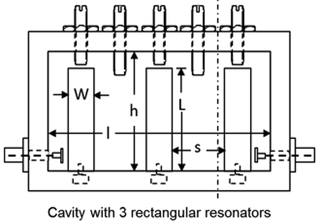
Figure 1(a): Cavity Filter (Rectangular Resonator Inside |
Figure 1(b): Electrical Equivalent of Cavity Resonator |
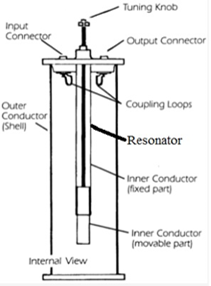
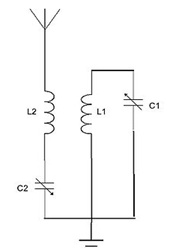
Several architectures including combline, helical & interdigital configurations can be used to realize the cavity filters.
|
|
|
 Combline cavity filter
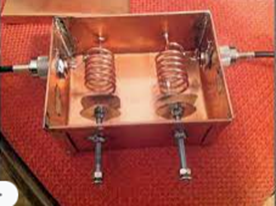 Helical cavity filter
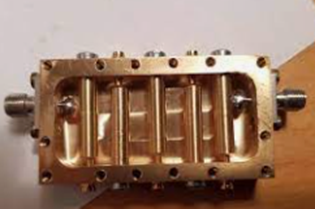 Interdigital cavity filter
There are different technologies available to implement resonators in cavity filters, these include rectangular waveguide resonators (Figure 1(a)), circular waveguide resonators, coaxial resonators, and dielectric resonators.
Advantages of Cavity Filter:
High Q-factor (up to the order of 106), low insertion loss, and robust temperature stability when compared to lumped element and distributed element filters. The Q-factor of the lumped element filters is only 102.
Superior selectivity and good frequency stability.
Reduces the transmitter sideband noise and also protect receivers against desensitization.
Better performance in microwave range when compared to lumped element and distributed element filters.
Disadvantages of Cavity Filters:
Manual tuning is required.
Auto tuning is possible with systematic software, however, this increases the cost.
Applications of Cavity Filters:
Cavity filters are ideal for use in military, commercial, broadcast, medical, SATCOM, wireless communication, radar, high-speed internet applications, space communications, automotive, duplexers for radio communications, real-time video streaming, and high–definition television.